Skip to content
Back to all posts

Posts tagged: Wearable Accuracy

10 posts found

A doctor reviewing patient data on a tablet, illustrating the gap between consumer wearable metrics and clinical usefulness
Wearable AccuracyDoctorClinical Data

Your Doctor Doesn't Want Your Wearable Data. Here Is What They Actually Want.

The NYT just published a piece on what health data doctors actually find useful. The answer is three metrics. Your smart ring gives you forty. Here is why that gap exists and what it means for products like Pulsyn.

James Hoffmann James Hoffmann
Jun 25, 2026 1 min read
Prescription medication pills on a dark surface, representing GLP-1 drugs like Ozempic and Wegovy
Heart RateOn Device AiHrv

What GLP-1 Drugs Do to Your Smart Ring's Readings

GLP-1 drugs like Ozempic and Wegovy increase your resting heart rate by 2-5 bpm, lower HRV, and change skin temperature. Here is how that breaks every wearable algorithm and why your recovery score is lying to you.

James Hoffmann James Hoffmann
Jun 23, 2026 1 min read
An assortment of prescription medication pills scattered across a surface, representing the medications that alter biometric signals measured by smart rings
BiometricsWearable AccuracyMedication

The Medications That Break Your Smart Ring's Algorithms

Beta-blockers suppress HRV by 30 to 50 percent. SSRIs alter sleep architecture. Antihistamines fragment deep sleep. If you take medication and your smart ring gives you bad scores, the problem might not be your body.

James Hoffmann James Hoffmann
Jun 19, 2026 1 min read
A woman in a tech workspace using a laptop, representing the underrepresentation of women in the datasets that train wearable algorithms
Wearable AccuracyAlgorithm BiasWomen Health

Your Smart Ring Was Trained on Men: The Gender Data Gap in Wearable Algorithms

Most wearable algorithms are trained on datasets that are 70 to 80 percent male. Heart rate thresholds, sleep stage classifiers, and stress baselines are systematically less accurate for women. Here is why, and what Pulsyn is doing about it.

James Hoffmann James Hoffmann
Jun 18, 2026 1 min read
Closeup of roasted coffee beans scattered on a white surface, representing the source of caffeine that disrupts wearable biometric readings
PpgHeart RateBiometrics

Why Your Morning Coffee Confuses Your Sleep Tracker: Caffeine, Biometrics, and the False Recovery Signal

Caffeine changes your biometrics in ways that look like recovery to a wearable. Higher HRV, elevated resting heart rate, and altered sleep architecture produce a readiness score that says you are rested while your body metabolizes a stimulant. Here is how the blind spot works and what wearables could do about it.

James Hoffmann James Hoffmann
Jun 17, 2026 1 min read
A runner training outdoors, with the kind of aerobic effort that wearables try to use for VO2 max estimation through submaximal heart rate analysis
Wearable AccuracyVo2 MaxCardio Fitness

Why Your Wearable's VO2 Max Estimate Is Probably Wrong (and What the Studies Actually Say)

Every running watch and fitness tracker claims to estimate your VO2 max. But the number on your wrist and the number from a gas exchange analyzer are different things. Here is what the validation studies actually measure, and why your wearable is probably off by 10 to 15 percent.

James Hoffmann James Hoffmann
Jun 14, 2026 1 min read
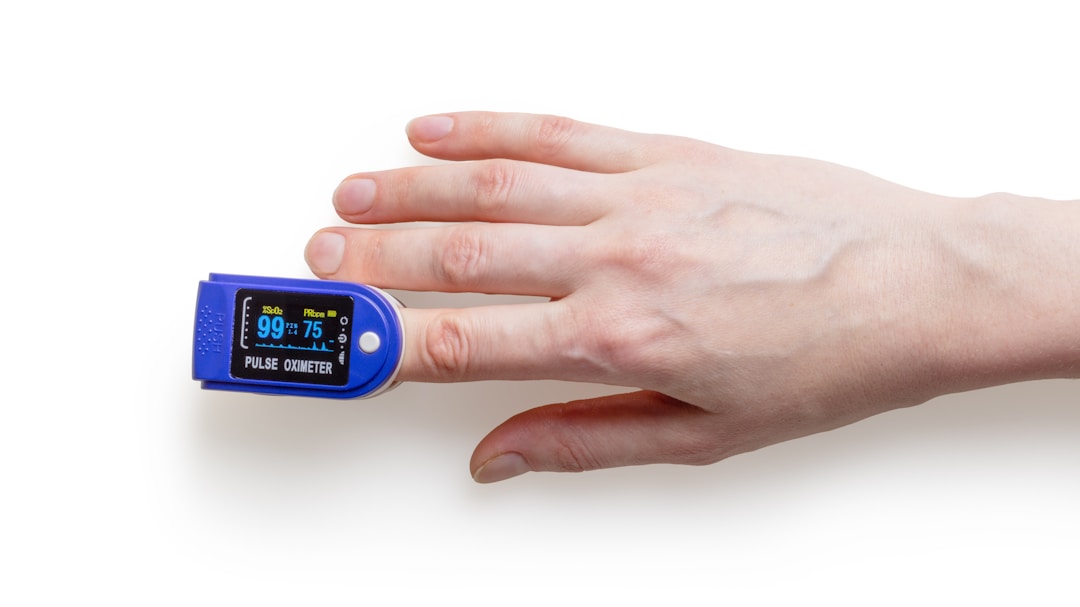
A pulse oximeter clipped on a finger showing how optical sensors measure blood flow through the skin, the same principle used in smart ring PPG sensors
PpgWearable AccuracySkin Tone Bias

Your Smart Ring's PPG Sensor Has a Skin Tone Problem. The Industry Is Quiet About It.

Green-light PPG sensors in smart rings measure pulse by shining LEDs through your skin. Melanin absorbs that green light, which means your Oura or Ultrahuman reads your heart rate differently based on your skin tone. The research shows 30 to 60 percent signal degradation on darker skin. The industry does not talk about it. Pulsyn is building a ring that does.

James Hoffmann James Hoffmann
Jun 13, 2026 1 min read
A night owl perched in darkness, illustrating the biological reality that not everyone is wired for early sleep — something no smart ring sensor can detect
ChronotypeSleep ScienceCircadian Rhythm

The Chronotype Problem: Why Your Smart Ring's 'Optimal Bedtime' Is Wrong for Half the Population

Your smart ring tells you to sleep at 9:30 PM because your heart rate dropped. But it does not know whether your brain produces melatonin at 9:30 PM or midnight. Chronotype, the genetic wiring that makes you a lark or a night owl, is ignored by every bedtime guidance feature on the market.

James Hoffmann James Hoffmann
Jun 11, 2026 1 min read
A person walking on a forest path, the kind of everyday movement that step counters attempt to measure
StepsActivity TrackingFitness Myths

What Your Step Count Actually Means and Why 10,000 Is a Marketing Number

The 10,000 step goal was invented in 1965 by a Japanese pedometer company. It had no clinical basis then and has only weak evidence now. Most wearables count steps using flawed accelerometer guesswork, which means your 8,000 step day and your friend's 8,000 step day are not the same health outcome.

James Hoffmann James Hoffmann
May 31, 2026 13 min read